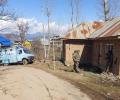
Security agencies are concerned about the increasing use of drones by terror groups in Jammu and Kashmir for surveillance and logistics, replacing human networks.

There was an environment of "indifference" towards the use of technology in governance before 2014 due to which the poor and the middle class suffered the most, Prime Minister Narendra Modi said on Friday. He asserted the current government has ensured last-mile delivery of services with the help of technology, including drones. Addressing a gathering after inaugurating India's biggest drone festival in Delhi, he said, "At a time when we are celebrating Azadi ka Amrit Mahotsav, it is my dream that everyone in India should have a smartphone in his or her hand, every farm should have a drone and every house should have prosperity." The enthusiasm being seen in India about drone technology is amazing and indicates possibilities of an emerging sector of employment generation, the prime minister said.

The Chinese military claims significant progress in drone warfare, reporting that a single soldier can control a swarm of 200 drones using AI technology. Tests conducted by the PLA-affiliated National University of Defence Technology showcase the potential of AI-enabled drone swarm warfare.

BikeWo Green Tech and Kwik Flite Support have signed an initial pact to develop an integrated air cargo, aviation logistics, and multimodal freight platform. This collaboration aims to combine road mobility with aviation capabilities to serve various industries, focusing on high-value and time-sensitive logistics across India, including Tier-II and Tier-III cities.

A Rajya Sabha lawmaker has filed a plea in the Supreme Court challenging the Delhi Police's alleged use of facial recognition technology and other biometric surveillance during a recent protest. The plea argues that such surveillance at peaceful assemblies is unconstitutional and lacks legal backing, seeking a declaration against its indiscriminate use and a mechanism for data access and deletion.

The Delhi Development Authority (DDA) has introduced a new Standard Operating Procedure (SOP) to tackle land encroachment and unauthorised constructions in the capital. Following Lieutenant Governor Taranjit Singh Sandhu's directive for "zero tolerance," the SOP mandates demolition within 72 hours of detection by dedicated Quick Response Teams and flying squads. The policy also incorporates technology like geo-tagging and drone inspections, alongside continuous monitoring to prevent re-encroachment.

Delhi is set to establish its first underground Chemical, Biological, Radiological and Nuclear (CBRN) command centre at the new Delhi Fire Services headquarters, a facility designed to ensure uninterrupted coordination and protection for personnel during nuclear warfare, radiological leaks, or chemical disasters.

Lieutenant General Seth's involvement in the army's capability development and modernisation efforts is evident from the key appointments he has held in the Strategic Planning and Capability Development Directorates, including Colonel Capability Development for Mechanised Forces, Brigadier Perspective Plans and Acquisition, and Additional Director General Capability Development.

'Improved law and order and transparent governance have helped change UP's investment image.'
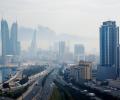
The modern war is about quality over quantity, points out Mihir S Sharma.
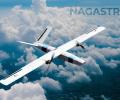
The foremost lesson for India today is to beef up its air defence to cater for multiple drone attacks. As seen in Operation Sindoor, we have come a long way, but there's room for getting better. We must develop a robust and almost impregnable air cover over ourselves, asserts IAF veteran Air Commodore Nitin Sathe (retd).

Once operational, Ghatak could undertake deep-strike missions, penetrating heavily defended airspace to hit high-value targets without placing pilots at risk.
Rajasthan's forest department is implementing an AI-based surveillance system across its wildlife sanctuaries to enhance anti-poaching efforts and monitor animal movement. The system, utilising thermal cameras, drones, and advanced software, provides 24x7 monitoring, helps prevent human-wildlife conflict through real-time alerts, and strengthens the fight against wildlife crime. Installations are being rolled out in phases across key protected areas, with advanced cameras capable of identifying individual animals and suspicious activities.

History may remember Takaichi Sanae not as the leader who simply accelerated Japanese rearmament, but as one who governed during Japan's transition from an industrial-age security model to a post-industrial strategic member of the global order, points out Varun Arya.

In a further escalation of the assault on the heavily fortified site, a missile strike also reportedly targeted the "helipad" at the embassy, as documented by Al Jazeera.

Underlining that students are the "architects of India's future," President Droupadi Murmu on Friday said the government is taking comprehensive steps to reform public examinations to completely curb paper leaks and unfair means, making the system transparent, secure, and trustworthy.
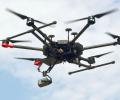
The same technologies that enable State forces to monitor and strike insurgent camps are now being mirrored by non-State actors with increasing sophistication.
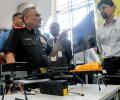
Chief of Defence Staff General Anil Chauhan emphasizes the importance of self-reliance in Unmanned Aerial Vehicles (UAVs) and Counter-Unmanned Aerial Systems (C-UAS) for India, citing recent global conflicts and Operation Sindoor as examples of their strategic importance.

In her address to the nation on the eve of the country's 80th Independence Day, the president stressed that just as government and society remain united to ensure national security, everyone must contribute through joint and concerted efforts to safeguard the present and future of students.

A lesson for India is to clearly define objectives beforehand, so that the adversary or other parties do not attempt to mitigate them midway.
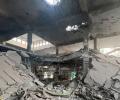
Under Mission Sudarshan Chakra, the country's national security shield is to be expanded by 2035 to ensure comprehensive protection of both strategic and civilian critical infrastructure.

A technology institute in Indore has developed an 'AI Yoga Coach' that can distinguish between correct and incorrect yoga postures and provide real-time guidance to practitioners.

Loitering munitions, often described as 'suicide drones' or 'kamikaze drones', are becoming central to modern warfare because of their ability to hover over target areas, identify threats and strike with high precision.

Chief of Army Staff General Upendra Dwivedi stated that the armed forces are fully prepared for 'Operation Sindoor 2.0' if the need arises, emphasising enhanced synergy across all three services for modern multi-domain warfare.

Amid ongoing ceasefire negotiations, Israel is on high alert, fearing a potential surprise missile and drone attack from Iran targeting Gulf countries and Israel, according to intelligence officials.
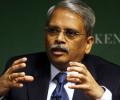
Infosys co-founder Kris Gopalakrishnan urges Indian startups to focus on deep technology and advanced manufacturing to ensure strategic autonomy.

Union Home Minister Amit Shah announced a new 'territorial security' paradigm to complement conventional border security, involving public participation and advanced technology. He also highlighted progress in securing vulnerable areas along the Pakistan border and plans to expand the BSF's operational mandate.
NASA has announced three missions to the moon as part of efforts to establish a permanent base on the earth's natural satellite. The USD 20 billion plan includes lunar rovers and drones for experiments to help master skills to live and operate in the dangerous environment.
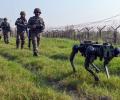
Union Home Minister Amit Shah announced the launch of a tech-enabled 'smart border' project to secure India's borders with Pakistan and Bangladesh. The project aims to stop infiltration and combat demographic changes.

'DRDO has been directed to license missile technologies to the private sector.'

'Why not aspire for 8 or 9 or even 10 per cent?'
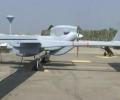
The sources declined to specify the number of drones the Navy plans to acquire but said the focus is now on manufacturing the MK-II in India through partnerships with Hindustan Aeronautics Limited (HAL) and Elcom.

A readout by the US said the agreement marked a milestone in the strategic partnership between the two nations to ensure that the foundational elements required for advanced technology and energy are available within trusted networks.

Netrasemi, an Indian semiconductor start-up, has announced that its flagship AI chipset, A2000, has achieved silicon bringup and is preparing for commercial production this year. The A2000 SoC, supported by Zoho and the government's DLI programme, will enable smart vision and real-time video analytics for smart cameras and edge AI platforms.

President Vladimir Putin announced that Russia has successfully tested the Poseidon, a nuclear-powered submersible drone with unlimited range, along with updates on the Sarmat missile and Burevestnik cruise missile.
The IAF's future operational concepts could involve indigenous Tejas combat aircraft coordinating in real time with multiple Ghatak RPSAs, each carrying a different mission payload ranging from electronic warfare systems and targeting sensors to precision munitions.
The Punjab Prisons and Correctional Services Bill, 2026, aims to transform prisons into centres of reform, rehabilitation, and social reintegration, focusing on inmates' human rights, transparency, and security.
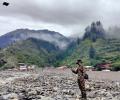
The Indian Army is equipping its infantry battalions with drone platoons and raising elite commando units as part of a modernization drive to enhance combat capabilities along the northern and western frontiers. The Army is also procuring new carbines and upgrading its arsenal with advanced weaponry.

Ayodhya district administration has imposed a complete ban on unauthorised drone operations across the district following an order by Chief Minister Yogi Adityanath due to potential drone-related threats.
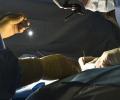
The Union Ministry of Health and Family Welfare has launched indigenous robotic technologies, Project Vimana and Project Operion, designed to perform life-saving surgeries on the battlefield, potentially revolutionising emergency care for injured security personnel.
